How Air Pollution Affects Your Lungs: Symptoms You Should Not Ignore
Table of Contents
Toggle1. Introduction & Public Health Impact
Air pollution is far more than an environmental concern—it is a critical public health issue that directly impacts lung tissue, respiratory mechanics, and long-term systemic well-being. Every day, individuals are exposed to complex mixtures of pollutants originating from vehicle emissions, construction dust, industrial stacks, waste burning, and agricultural practices. When inhaled, these airborne toxins penetrate deep into the respiratory tract. While brief exposures trigger immediate airway hyper-reactivity and discomfort, chronic low-grade exposure can permanently alter lung function, accelerate tissue degradation, and worsen existing conditions like asthma and Chronic Obstructive Pulmonary Disease (COPD).
2. Biological Mechanisms:
The human respiratory system uses nasal cilia and mucous membranes to filter coarse particles. However, microscopic pollutants bypass these natural defenses:
Fine Particulate Matter (PM2.5): Particles smaller than 2.5 micrometers travel past the bronchioles directly into the alveoli, where they cross into the bloodstream and trigger severe localized oxidative stress and systemic inflammation.
Nitrogen Dioxide (NO2) & Ozone (O3): Reactive gaseous compounds that cause direct chemical epithelial damage, increasing airway sensitivity and mucus secretion.
Airway Hyper-reactivity: Pollutants stimulate airway smooth muscle contraction, leading to bronchospasm, reduced airflow capacity, and impaired gas exchange.
3. Key Pollutant Summary
1. PM2.5 / PM10
Primary Sources: Vehicles, dust, industrial burning.
Target Respiratory Impact: Alveolar inflammation, oxidative stress, vascular entry.
2. Nitrogen Dioxide (NO₂)
Primary Sources: Automobile exhaust, power plants.
Target Respiratory Impact: Bronchial swelling, increased vulnerability to respiratory infections.
3. Ground-Level Ozone (O₃)
Primary Sources: Sunlight reactions with exhaust gases.
Target Respiratory Impact: Severe lung tissue irritation, reduced lung capacity, wheezing.
4. Recognized Clinical Symptoms
Pollution exposure presents with a spectrum of acute and insidious symptoms that should prompt medical evaluation:
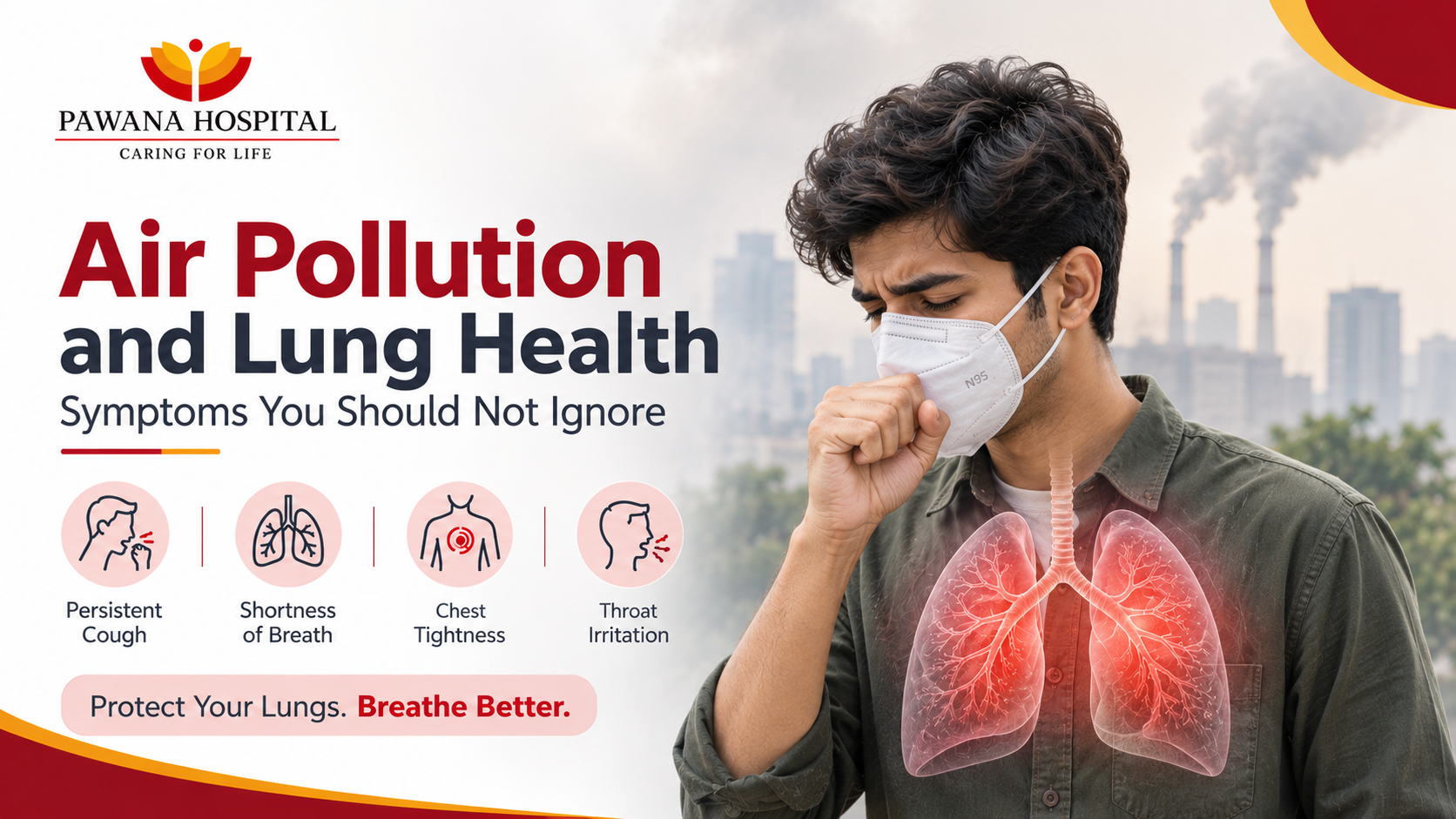
1. Persistent Cough:
Irritation of sensory nerve endings in the bronchial wall triggers reflex coughing, which may become chronic with sustained exposure.
2. Shortness of Breath (Dyspnea):
Difficulty catching breath during routine physical exertion, indicating diminished ventilatory capacity.
3. Wheezing:
High-pitched musical breath sounds caused by air forcing through narrowed, inflamed airways.
4. Chest Tightness:
A sensation of constriction or pressure across the chest cavity following outdoor exposure.
5. Mucosal Irritation:
Burning sensations in the throat, nasal congestion, sneezing, and ocular redness or tearing.
6. Chronic Disease Exacerbation:
Frequent requirement of rescue inhalers or emergency medical visits among known asthma and COPD patients.
5. High-Vulnerability Population Groups
| Vulnerable Group | Specific Physiological Susceptibility |
|---|---|
| Developing Children | Higher minute ventilation relative to body weight; lungs continue developing until early adulthood. |
| Older Adults (65+) | Age-related loss of pulmonary elasticity and higher baseline rate of cardiovascular comorbidities. |
| Asthma & COPD Patients | Pre-existing airway inflammation amplifies the broncho-constrictive effects of pollutants. |
| Outdoor Workers | High cumulative dose exposure due to hours spent near heavy traffic or construction sites. |
6. Long-Term Chronic Health Risks
7. Practical Evidence-Based Protection Steps
8. Clinical Evaluation & Diagnostic Testing
When presenting to Pawana Hospital with pollution-related respiratory complaints, pulmonologists perform structured assessments:
| Diagnostic Test | Clinical Purpose |
|---|---|
| Spirometry (PFT) | Measures FEV1 and FVC to detect obstructive or restrictive airway impairment. |
| Pulse Oximetry | Non-invasive real-time measurement of arterial oxygen saturation (SpO2). |
| Chest Radiograph / CT | Rules out lower respiratory tract infections, interstitial changes, or parenchymal lesions. |
| Fractional Exhaled Nitric Oxide (FeNO) | Quantifies allergic airway inflammation and bronchial hyper-responsiveness. |
9. Frequently Asked Questions (FAQs)
10. Summary & Conclusion