
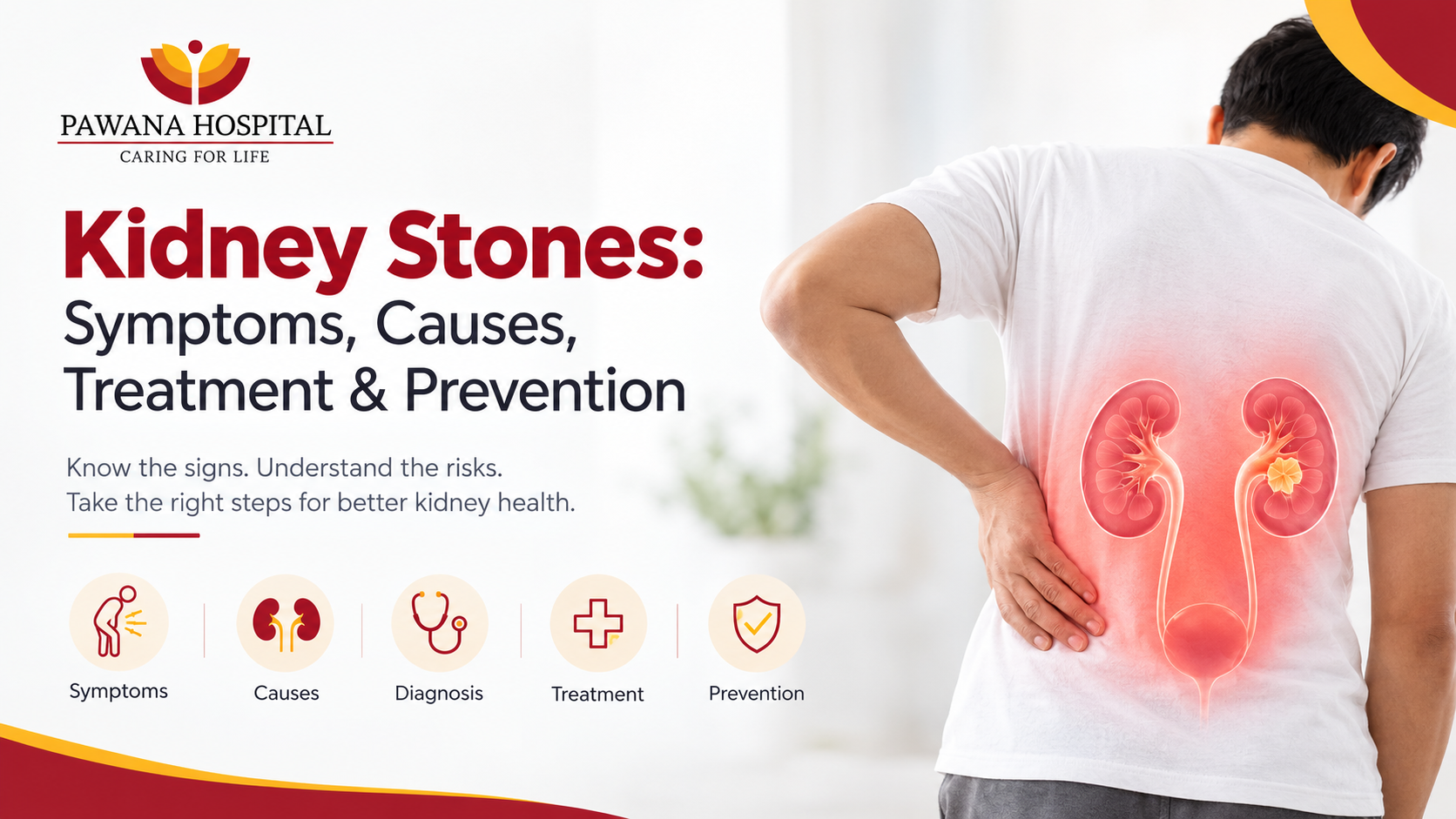
Kidney Stones: Symptoms, Causes, Treatment and Prevention Guide
Table of Contents
ToggleIntroduction
Kidney stones are hard deposits that form when certain substances in urine become concentrated and crystallize.
Stones can remain in the kidney or move into the ureter, the tube that carries urine from the kidney to the bladder. Some small stones pass with minimal symptoms, while others can cause intense pain, bleeding, urinary blockage, or infection.
The treatment approach depends on the stone’s size, location, composition, symptoms, and whether complications are present.
Common Symptoms
• Severe pain in the side or back
• Pain that may move toward the lower abdomen or groin
• Pain that comes and goes in waves
• Burning or pain during urination
• Blood in the urine
• Frequent or urgent urination
• Nausea or vomiting
• Cloudy or foul-smelling urine
Why Kidney Stones Form
Stones can form when urine contains high levels of stone-forming substances or when urine volume is low. Low fluid intake is an important modifiable risk factor for many patients. Other factors may include diet, family history, obesity, certain digestive disorders, metabolic conditions, urinary abnormalities, recurrent infections, and some medicines or supplements.
Common Types of Kidney Stones
Calcium stones: The most common category and often composed of calcium oxalate.
Uric acid stones: May occur when urine is persistently acidic.
Struvite stones: Can be associated with certain urinary infections.
Cystine stones: Occur in people with a rare inherited disorder affecting cystine handling.
Risk Factors
• Not drinking enough water
• Living or working in conditions that increase fluid loss
• High salt intake
• Family or personal history of stones
• Certain bowel or metabolic conditions
• Some medications
How Kidney Stones Are Diagnosed
A doctor evaluates the pattern of pain, urinary symptoms, previous stone history, diet, medicines, and medical conditions.
Physical examination and investigations help determine whether a stone is present and whether there is obstruction or infection.
Tests That May Be Recommended
• Urine examination to look for blood, infection, and other abnormalities
• Blood tests to assess kidney function and relevant metabolic factors
• Ultrasound in appropriate situations
• CT scan when detailed stone location and size are needed
• Analysis of a passed or removed stone
Why Stone Analysis Matters
Knowing the stone type can help guide prevention. Patients with recurrent stones may need a more detailed metabolic evaluation to identify factors that can be modified.
Treatment Options
Small uncomplicated stones may be managed with fluids when appropriate, pain control, and observation.
Some patients may receive medicine to help stone passage depending on the clinical situation. Stones that are large, cause persistent obstruction, severe symptoms, infection, or kidney problems may require a procedure.
Procedures Used for Kidney Stones
• Shock wave lithotripsy in selected cases
• Ureteroscopy to access and treat stones in the urinary tract
• Other endoscopic or surgical procedures for larger or complex stones
Important Safety Point
A urinary obstruction combined with infection can become serious. Fever or chills with stone symptoms require prompt medical attention.
Prevention
• Drink enough water to maintain good urine output unless a doctor has advised fluid restriction
• Reduce excessive salt intake
• Maintain a healthy body weight
• Follow a balanced diet rather than making extreme dietary restrictions
• Avoid unnecessary supplements without medical advice
• Follow stone-specific dietary advice when the stone composition is known
Advanced Kidney Stone Treatment Techniques:
RIRS (Retrograde Intrarenal Surgery) –
A flexible ureteroscope and laser are used to break kidney stones without an external incision.
Mini-PCNL / Ultra-mini PCNL –
Uses a smaller access tract than conventional PCNL, potentially reducing bleeding and supporting faster recovery in selected patients.
Laser Lithotripsy (Holmium:YAG / Thulium Fiber Laser) –
Modern laser systems fragment or “dust” stones into very small particles.
Flexible Ureteroscopy (fURS) –
Minimally invasive endoscopic treatment for selected kidney and ureteric stones.
ESWL (Extracorporeal Shock Wave Lithotripsy) –
Uses externally generated shock waves to break suitable stones without an incision.
ECIRS (Endoscopic Combined Intrarenal Surgery) –
Combines percutaneous and retrograde endoscopic approaches, particularly for selected complex or large stone burdens.
Suction-assisted stone removal –
Newer suction-enabled access sheaths/PCNL systems can help evacuate fragments during endoscopic stone treatment.
FAQs
Can small kidney stones pass naturally?
Yes. Some small stones can pass on their own, depending on their size and location.
Does drinking water prevent stones?
Adequate hydration is one of the most important preventive measures for many stone formers.
Can kidney stones return?
Yes. Recurrence is possible, especially when underlying risk factors remain.
Does every stone need surgery?
No. Treatment depends on size, location, symptoms, obstruction, infection, and other factors.
When should I seek urgent care?
Seek prompt care for severe pain with fever, chills, persistent vomiting, reduced urine output, or difficulty passing urine.
Conclusion
Kidney stones are common and can range from a minor problem to a medical emergency when obstruction or infection occurs. Early diagnosis, appropriate treatment, good hydration, and targeted prevention can reduce complications and recurrence.