Migraine Headache: Symptoms, Triggers, Treatment and When to See a Doctor
Table of Contents
ToggleIntroduction
Migraine is a neurological condition that can cause repeated attacks of moderate to severe headache.
The pain is often throbbing or pulsating and may affect one side of the head, although some people experience pain on both sides.
Migraine can interfere with work, study, sleep, and daily activities. An attack may last for several hours and, in some people, longer. Nausea, vomiting, sensitivity to light, sensitivity to sound, fatigue, and difficulty concentrating can occur along with the headache. The pattern varies widely from person to person.
Common Symptoms
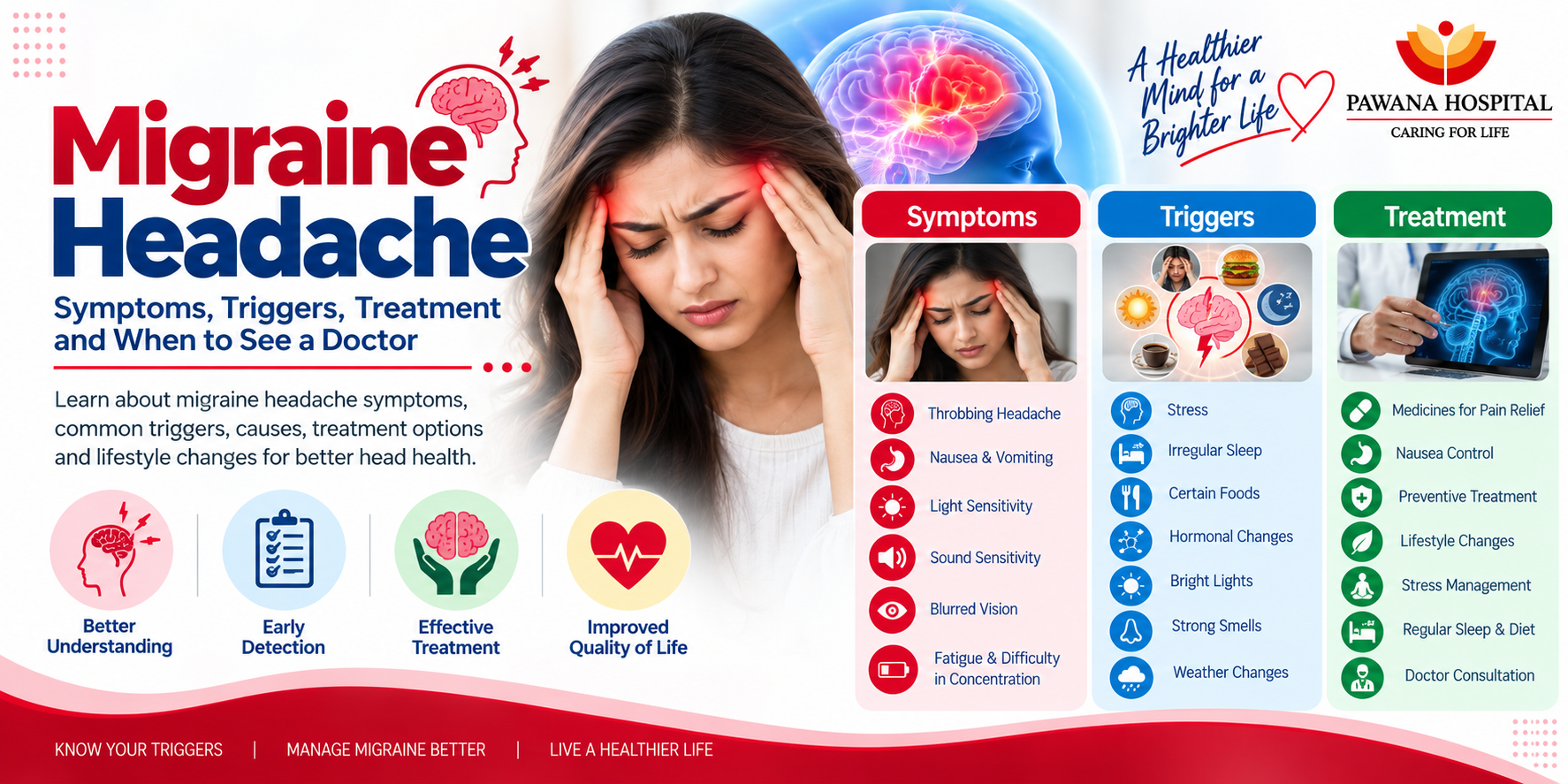
• Throbbing or pulsating head pain
• Pain that becomes worse with routine physical activity
• Nausea or vomiting
• Sensitivity to bright light or loud sound
• Fatigue and difficulty concentrating
• Neck discomfort in some people
• Visual or sensory symptoms in some migraine attacks
Why Migraine Should Not Be Ignored
Frequent headaches can affect quality of life and may lead to repeated use of pain medicines. A medical assessment can help distinguish migraine from other causes of headache and guide an appropriate treatment plan.
Migraine With Aura
Aura refers to temporary neurological symptoms that may occur before or during a migraine.
Visual aura may include flashing lights, zigzag lines, shimmering spots, or areas of reduced vision. Some people experience tingling, numbness, or temporary speech difficulty.
Aura symptoms usually develop gradually, but new or unusual neurological symptoms should not automatically be assumed to be migraine. They may require prompt medical evaluation.
Common Migraine Triggers
• Emotional stress
• Too little sleep or major changes in sleep routine
• Skipping meals or fasting
• Dehydration
• Bright lights, loud sounds, or strong smells
• Hormonal changes
• Excess caffeine or sudden caffeine withdrawal
• Certain foods or beverages in susceptible individuals
Keeping a Migraine Diary
Recording the date, duration, severity, associated symptoms, food intake, sleep, stress, menstrual cycle, and medicines used can help identify patterns. A diary can also help a doctor assess whether treatment is working.
How Migraine Is Diagnosed
There is no single test that confirms every case of migraine. Diagnosis is usually based on the headache pattern, associated symptoms, medical history, family history, and neurological examination.
A doctor may ask when the headaches started, how often they occur, how long they last, where the pain is located, whether nausea or sensitivity to light occurs, and what medicines have been used.
When Tests May Be Needed
Imaging or other investigations are not required for every person with typical migraine. They may be considered when symptoms are unusual, the neurological examination is abnormal, the headache pattern has changed significantly, or another condition needs to be excluded.
Other Headaches That May Resemble Migraine
• Tension-type headache
• Headache related to sinus or respiratory illness
• Medication-overuse headache
• Headache associated with high fever or infection
• Secondary headaches caused by other medical conditions
Treatment During a Migraine Attack
Treatment depends on the severity and frequency of attacks and the person’s medical history.
A doctor may recommend suitable pain-relief or migraine-specific medicines. Medicines for nausea may also be considered when needed. Using acute headache medicines too frequently can itself contribute to recurring headaches, so medication use should be discussed with a doctor when attacks are frequent.
Preventive Treatment
People with frequent, prolonged, or disabling migraine may be considered for preventive treatment. The choice depends on medical history, other health conditions, pregnancy plans, side effects, and the pattern of migraine.
Lifestyle Measures
• Maintain a regular sleep schedule
• Eat regular meals
• Drink adequate water
• Exercise regularly as medically appropriate
• Use stress-management techniques
• Limit known personal triggers
• Avoid excessive self-medication
When to See a Doctor
Consult a doctor if headaches are frequent, interfere with daily life, are becoming more severe, or require repeated pain medicine. Medical review is also appropriate when a new type of headache develops.
Emergency Warning Signs
• A sudden, extremely severe headache
• Weakness or numbness on one side
• New difficulty speaking or seeing
• Confusion, fainting, or seizures
• Headache with high fever and severe neck stiffness
• Severe headache after a significant head injury
FAQs
Is migraine the same as a normal headache?
No. Migraine is a neurological disorder and may include nausea, light or sound sensitivity, and other symptoms.
Can stress trigger migraine?
Yes. Stress is a common trigger for many people.
Can lack of sleep trigger migraine?
Yes. Irregular or insufficient sleep can trigger attacks in susceptible people.
Can migraine be managed?
Yes. Trigger management, lifestyle measures, and appropriate medicines can reduce the burden of migraine for many patients.
When is a headache an emergency?
A sudden severe headache or headache with new neurological symptoms requires urgent medical evaluation.
Conclusion
Migraine can significantly affect daily life, but it can often be managed with an accurate diagnosis, identification of triggers, healthy routines, and an individualized treatment plan.
Persistent, changing, or severe headaches should be evaluated by a healthcare professional.