High Cholesterol Symptoms and Levels
Table of Contents
TogglePawana Hospital Team
By Pawana Hospital Team | Gynecology & Endocrinology | August 2026 | 9 min read
Diabetes does not develop or change based on a single day’s blood sugar reading. Your glucose levels continuously rise and fall depending on what you eat, physical activity, stress, sleep, illness, and medications. This is why doctors often need more than a fasting or random blood sugar reading to understand how well your blood sugar has been controlled over time.
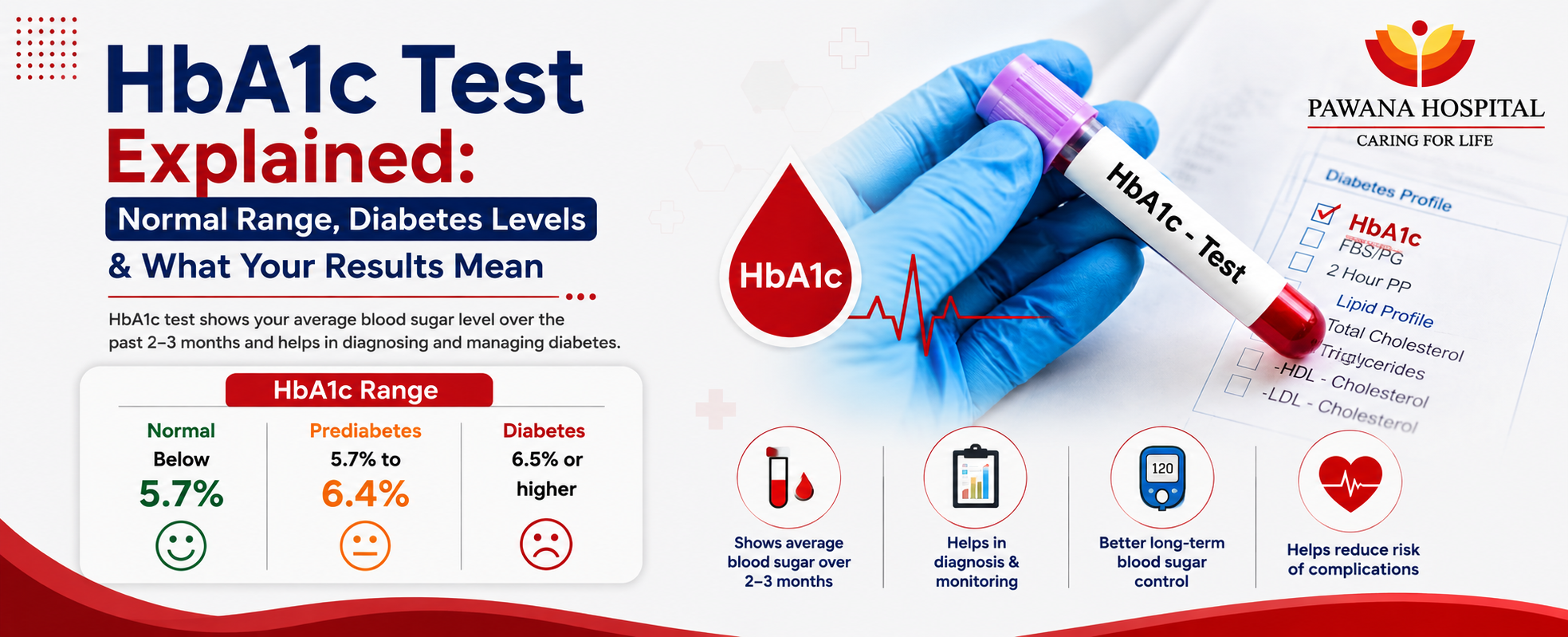
The HbA1c test, also known as the glycated haemoglobin test, provides a broader picture. It helps estimate your average blood glucose levels over approximately the previous two to three months and is commonly used to screen for, diagnose, and monitor diabetes.
Understanding your HbA1c result can help you know whether your blood sugar is within a healthy range, whether you may be at increased risk of developing diabetes, and whether an existing diabetes management plan is working effectively.
What Is an HbA1c Test?
HbA1c stands for glycated haemoglobin.
Haemoglobin is a protein found inside red blood cells that carries oxygen throughout the body. When glucose circulates in the bloodstream, some of it naturally attaches to haemoglobin.
This glucose-attached haemoglobin is known as glycated haemoglobin.
The HbA1c test measures the percentage of haemoglobin that has glucose attached to it. In general, the higher your average blood glucose has been, the higher your HbA1c result is likely to be.
Unlike a fasting blood sugar test, HbA1c testing generally does not require fasting, making it a convenient investigation for many patients.
How Does HbA1c Measure Average Blood Sugar?
Red blood cells normally circulate in the body for around three to four months. During their lifespan, haemoglobin within these cells is continuously exposed to glucose in the bloodstream.
When blood glucose levels remain elevated, more glucose attaches to haemoglobin.
Because red blood cells remain in circulation for several weeks, measuring glycated haemoglobin provides an indication of average glucose exposure over approximately the previous two to three months.
However, HbA1c should not always be interpreted alone. Doctors may consider it alongside fasting blood sugar, post-meal glucose, random blood sugar, symptoms, medications, and the patient’s overall health.
HbA1c Normal, Prediabetes & Diabetes Ranges
For many non-pregnant adults, HbA1c results are generally interpreted as:
- Normal: Below 5.7%
- Prediabetes: 5.7% to 6.4%
- Diabetes: 6.5% or higher
An HbA1c result of 6.5% or above may indicate diabetes, but diagnosis should be made by a qualified healthcare professional. In someone without clear symptoms, doctors may recommend repeat testing or another glucose-based test to confirm the diagnosis.
For people who already have diabetes, the appropriate HbA1c target can vary. Age, duration of diabetes, medications, risk of low blood sugar, pregnancy, other medical conditions, and overall health can influence the target recommended by a doctor.
Therefore, your HbA1c result should be interpreted in the context of your individual health rather than compared with someone else’s target.
HbA1c vs Fasting Blood Sugar vs Random Blood Sugar
These tests all evaluate blood glucose, but they provide different information.
1. HbA1c:
Provides an indication of average blood glucose control over approximately two to three months.
2.Fasting Blood Sugar:
Measures blood glucose after an overnight fasting period and provides a snapshot of glucose at that particular time.
3.Random Blood Sugar:
Measures glucose at any time of the day, regardless of when you last ate
A person can occasionally have a normal glucose reading while still having an elevated HbA1c. Similarly, temporary factors such as illness or stress can sometimes affect individual glucose readings.
For this reason, doctors may use a combination of tests when assessing diabetes or monitoring blood sugar control.
What Does a High HbA1c Result Mean?
A high HbA1c generally indicates that average blood glucose has remained elevated over the previous several weeks or months.
For someone without a previous diabetes diagnosis, an elevated result may indicate prediabetes or diabetes and may require additional evaluation.
For someone already receiving diabetes treatment, a higher-than-target HbA1c may suggest that the current management plan needs to be reviewed.
Persistently uncontrolled blood glucose can increase the long-term risk of complications involving:
- Heart and blood vessels
- Kidneys
- Eyes
- Nerves
- Feet and wound healing
A high HbA1c result does not automatically mean that complications have already developed. Instead, it is an important signal to discuss blood sugar management with your healthcare provider.
What Can Affect HbA1c Test Results?
Although HbA1c is a valuable test, certain health conditions and situations can influence the accuracy or interpretation of the result.
These may include:
- Certain types of anaemia
- Recent significant blood loss
- Recent blood transfusion
- Some haemoglobin disorders
- Pregnancy Kidney or liver disease
- Conditions affecting red blood cell lifespan
Because of these factors, patients should tell their doctor about existing medical conditions, pregnancy, recent blood transfusions, and medications before interpreting an unusual HbA1c result. If HbA1c is considered unreliable in a particular situation, a doctor may recommend alternative blood glucose investigations.
How Often Should You Get an HbA1c Test?
The frequency of HbA1c testing depends on your health status and how well diabetes is being controlled.
People with stable diabetes who are consistently meeting their treatment goals may require testing less frequently. Those whose treatment has recently changed or whose glucose levels are not within their recommended range may require HbA1c testing more often.
People at increased risk of diabetes may also be advised to undergo periodic screening based on age, weight, family history, lifestyle, and other risk factors.
Your diabetologist can recommend an appropriate testing schedule based on your individual condition.
How to Lower HbA1c Safely
Lowering HbA1c is usually not about finding one quick solution. Sustainable blood sugar management involves consistent changes over time.
Important steps may include:
- Follow a balanced diet: Focus on appropriate portions, vegetables, whole grains, protein sources, fibre-rich foods, and meals that support stable blood glucose levels.
- Exercise regularly: Regular physical activity can help the body use glucose more effectively and improve insulin sensitivity.
- Maintain a healthy weight: For people who are overweight, medically appropriate weight management may improve glucose control.
- Monitor blood glucose: Regular monitoring can help identify patterns such as consistently high fasting or post-meal glucose levels.
- Attend regular follow-ups: Diabetes management may need adjustment over time based on HbA1c results, glucose readings, lifestyle, medications, and other health conditions.
Most importantly, avoid trying to lower HbA1c extremely quickly without medical supervision. Your treatment plan should focus on safe and sustainable glucose control.
Diabetes Care at Pawana Hospital
Effective diabetes management involves more than controlling a single blood sugar number. Patients may require regular glucose monitoring, HbA1c testing, lifestyle guidance, medication management, and screening for diabetes-related complications.
At Pawana Hospital, patients can receive evaluation and ongoing support for diabetes and related metabolic conditions through the hospital’s diabetology services.
Depending on individual needs, diabetes care may include blood glucose assessment, HbA1c monitoring, medication review, dietary and lifestyle guidance, and evaluation of associated cardiovascular and other health risks.
Regular medical follow-up can help patients understand their numbers, identify changes early, and develop a diabetes management plan appropriate for their individual health needs.
When Should You Consult a Diabetologist?
Consider consulting a diabetologist if you have an abnormal HbA1c result or repeatedly elevated blood glucose levels.
Medical evaluation is also important if you experience symptoms such as:
- Increased thirst
- Frequent urination
- Unexplained weight loss
- Persistent fatigue
- Blurred vision
- Slow-healing wounds
- Frequent infections
- Tingling or numbness in the hands or feet
People with a strong family history of diabetes, obesity, hypertension, high cholesterol, or other metabolic risk factors may also benefit from regular diabetes screening.
If you already have diabetes, regular follow-ups are important even when you feel completely well because high blood sugar may not always cause obvious symptoms.
FAQs
Q: Do I need to fast before an HbA1c test?
Generally, fasting is not required specifically for an HbA1c test. However, if your doctor has ordered other blood tests at the same time, fasting may be required for those investigations.
Q: Can HbA1c diagnose diabetes?
HbA1c is one of the tests that may be used to diagnose diabetes. An HbA1c of 6.5% or higher falls within the diabetes range, but diagnosis and any necessary confirmatory testing should be determined by a healthcare professional.
Q:What is a good HbA1c level for someone with diabetes?
There is no single ideal target for every person with diabetes. The appropriate target depends on factors such as age, medications, duration of diabetes, risk of hypoglycaemia, other health conditions, and pregnancy. Your doctor should determine your individual goal.
Q: Why is my HbA1c high when my fasting sugar is normal?
A fasting glucose result reflects one point in time. Blood sugar may rise at other times, particularly after meals, while the fasting reading remains within range. HbA1c provides a broader picture of glucose exposure over several weeks
Q:Can diet and exercise reduce HbA1c?
Healthy eating, regular exercise, appropriate weight management, and other lifestyle changes can contribute significantly to better glucose control. Some people may also require medication depending on their diabetes status and overall health. recommended in addition to lifestyle changes.
Conclusion
HbA1c is one of the most useful tests for understanding long-term blood sugar control. Rather than showing what your glucose is at a single moment, it provides insight into how your blood sugar has behaved over the previous two to three months.
Knowing your HbA1c can help identify prediabetes or diabetes, evaluate the effectiveness of an existing treatment plan, and guide decisions about diet, exercise, medication, and ongoing monitoring.
If your HbA1c is higher than expected, do not focus only on the number. Discuss the result with a qualified healthcare professional to understand why it is elevated and what changes may be appropriate for you.
Regular testing, appropriate treatment, healthy lifestyle habits, and timely medical follow-up can play an important role in maintaining long-term blood sugar control and reducing the risk of diabetes-related complications.