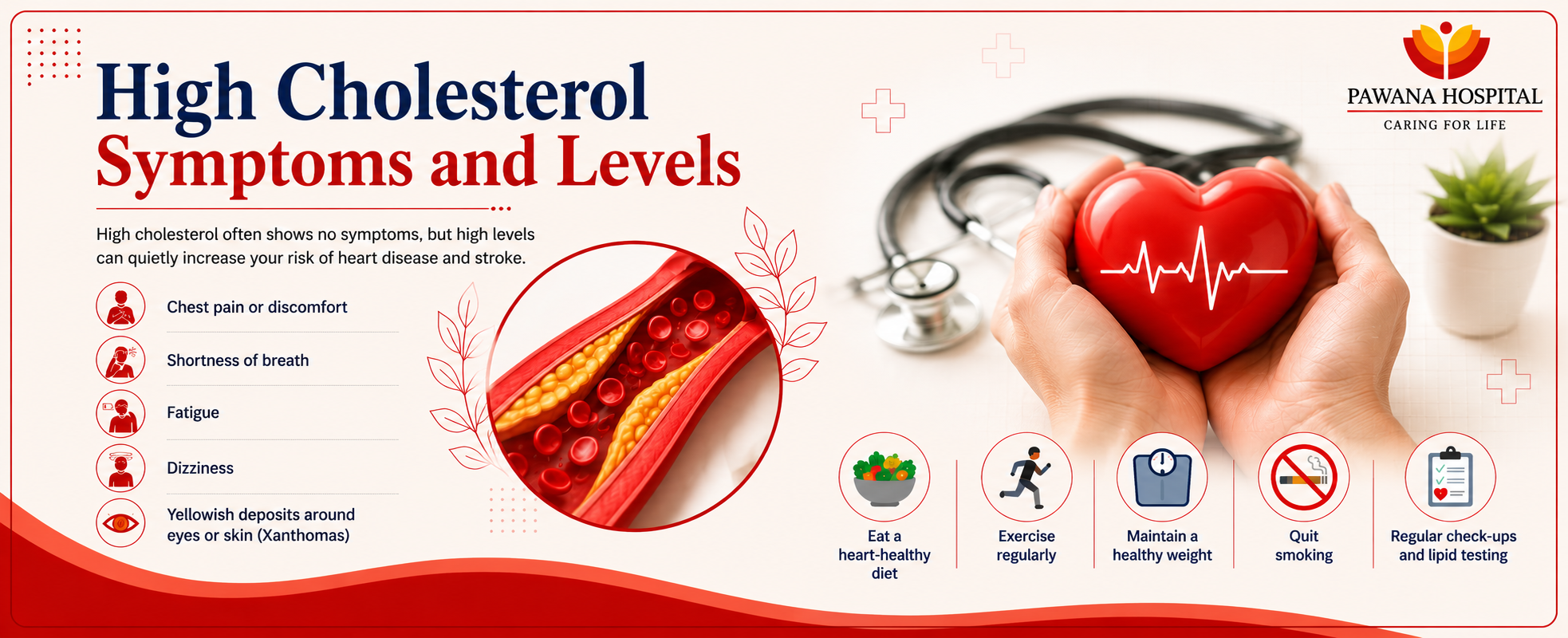
High Cholesterol Symptoms and Levels
Table of Contents
Toggle
Pawana Hospital Team
By Pawana Hospital Team | Gynecology & Endocrinology | August 2026 | 9 min read
High cholesterol is often called a silent health risk because it usually does not cause noticeable symptoms. You may feel completely healthy while unhealthy cholesterol levels gradually contribute to fatty deposits inside your arteries.
Over time, these deposits can narrow or block blood vessels and increase the risk of serious cardiovascular problems, including coronary artery disease, heart attack, and stroke.
A simple blood test called a lipid profile can measure different types of cholesterol and fats in your blood. But understanding the report requires more than looking at total cholesterol alone. LDL cholesterol, HDL cholesterol, triglycerides, and your overall cardiovascular risk all matter.
Knowing your cholesterol levels, understanding your risk factors, and taking action early can help protect your heart before symptoms or complications develop.
What Is Cholesterol?
Cholesterol is a waxy, fat-like substance found in the blood and cells of the body.
Although cholesterol is often discussed negatively, the body actually needs it for several important functions, including producing certain hormones, supporting cell membranes, and helping produce vitamin D and bile acids. The body produces cholesterol naturally, primarily through the liver. Cholesterol levels are also influenced by diet, genetics, body weight, physical activity, medical conditions, and other factors.
Because cholesterol cannot travel freely through the bloodstream, it is transported in particles called lipoproteins.
The two most commonly discussed lipoproteins are:
• Low-density lipoprotein (LDL)
•High-density lipoprotein (HDL)
Triglycerides are another type of fat measured as part of a standard lipid profile.
Understanding the difference between these values is important when interpreting your cholesterol report.
LDL vs HDL vs Triglycerides
A lipid profile contains several numbers, and each provides different information about cardiovascular health.
LDL Cholesterol
Low-density lipoprotein (LDL) is commonly referred to as “bad cholesterol.”
When LDL levels are elevated, cholesterol can accumulate within artery walls and contribute to plaque formation.
In general, lower LDL levels are preferable, particularly for people who already have cardiovascular disease or have a high risk of developing it.
HDL Cholesterol
High-density lipoprotein (HDL) is commonly called “good cholesterol.”
HDL helps transport cholesterol away from the bloodstream and back toward the liver for processing.
Higher HDL levels have traditionally been associated with lower cardiovascular risk, but doctors assess HDL as part of the overall lipid profile rather than relying on this number alone.
Triglycerides
Triglycerides are another type of fat circulating in the bloodstream. 2The body stores excess calories as triglycerides for later energy use. Elevated triglycerides may occur alongside obesity, diabetes, metabolic problems, unhealthy dietary patterns, excessive alcohol consumption, and certain medical conditions.
Very high triglyceride levels can also create health risks beyond cardiovascular disease.
Understanding Your Lipid Profile
A lipid profile or lipid panel is a blood test used to measure important fats in the bloodstream.
A typical report may include:
- Total cholesterol
- LDL cholesterol
- HDL cholesterol
- Triglycerides
- Sometimes additional calculated values such as non-HDL cholesterol
Total Cholesterol
This provides an overall measurement of cholesterol circulating in the blood.
However, total cholesterol alone does not provide the complete picture.
Two people with similar total cholesterol can have very different LDL, HDL, and triglyceride levels and therefore different cardiovascular risk profiles.
Why LDL Matters
LDL is particularly important when doctors evaluate cardiovascular risk because elevated LDL contributes directly to atherosclerotic plaque formation.
For people who already have coronary artery disease, diabetes, previous heart attack, stroke, or other significant risk factors, doctors may recommend stricter LDL targets.
Your cholesterol report should therefore be interpreted together with your medical history rather than viewed as a collection of isolated numbers.
What Cholesterol Levels Are Considered High?
For adults, commonly used general reference categories include:
1. Total Cholesterol
- Desirable: Below 200 mg/dL
- Borderline high: 200–239 mg/dL
- High: 240 mg/dL or above
2.LDL Cholesterol
- Optimal: Below 100 mg/dL
- Near optimal: 100–129 mg/dL
- Borderline high: 130–159 mg/dL
- High: 160–189 mg/dL
- Very high: 190 mg/dL or above
3.HDL Cholesterol
Lower HDL levels may be associated with increased cardiovascular risk, while higher levels are generally considered more favourable.
4.Triglycerides
- Normal: Below 150 mg/dL
- Borderline high: 150–199 mg/dL
- High: 200–499 mg/dL
- Very high: 500 mg/dL or above
These numbers provide general guidance, but they should not be used to decide treatment without medical evaluation.
A cholesterol level considered acceptable for one person may not be the appropriate target for someone who has diabetes, established heart disease, previous stroke, kidney disease, or several cardiovascular risk factors.
Does High Cholesterol Cause Symptoms?
Usually, high cholesterol itself does not cause noticeable symptoms.
This is one of the reasons it can remain undetected for years.
People sometimes assume that symptoms such as headache, dizziness, chest discomfort, or tiredness automatically indicate high cholesterol. However, these symptoms cannot reliably tell you what your cholesterol level is.
A blood test is required.
In some inherited cholesterol disorders, visible cholesterol deposits may occasionally develop around the skin, eyes, or tendons, but these findings are not present in most people with high cholesterol.
Unfortunately, for some patients, the first obvious sign of underlying cholesterol-related artery disease may be a serious complication such as angina, heart attack, or stroke.
Regular screening is therefore much safer than waiting for symptoms.
What Causes High Cholesterol?
High cholesterol can result from a combination of lifestyle, genetic, and medical factors.
Diet
Regular consumption of foods high in saturated and trans fats can contribute to unhealthy LDL cholesterol levels. Physical Inactivity A sedentary lifestyle can negatively affect cardiovascular and metabolic health.
Excess Body Weight
Being overweight or obese may be associated with elevated LDL and triglycerides and other metabolic risk factors.
Smoking
Smoking damages blood vessels and significantly increases cardiovascular risk, particularly when combined with abnormal cholesterol levels.
Diabetes
Poorly controlled diabetes can contribute to an unhealthy lipid pattern and substantially increase cardiovascular risk.
Certain Medical Conditions
Some thyroid, kidney, liver, and metabolic conditions can influence cholesterol levels.
Genetics
Some people inherit conditions that cause extremely high cholesterol levels despite being young, active, or following a relatively healthy lifestyle.
One important inherited condition is familial hypercholesterolemia, which can cause markedly elevated LDL cholesterol and increase the risk of premature cardiovascular disease.
Who Is at Higher Risk?
Anyone can develop abnormal cholesterol levels, but certain people require particularly careful monitoring.
Risk may be higher if you:
- Have a family history of high cholesterol
- Have a family history of premature heart disease
- Have diabetes
- Have high blood pressure
- Are overweight or obese
- Smoke or previously smoked
- Have a sedentary lifestyle
- Follow a diet high in saturated or trans fats
- Have certain kidney or thyroid conditions
- Have previously experienced heart disease or stroke
- Have increasing cardiovascular risk with age
Having several risk factors together can significantly increase cardiovascular risk even when an individual cholesterol result does not appear extremely high.
How High Cholesterol Affects Your Arteries
The main long-term concern with elevated LDL cholesterol is atherosclerosis.
Atherosclerosis is a gradual process in which cholesterol-containing plaque develops within artery walls.
Over time, this can cause arteries to become:
- Narrower
- Less flexible
- More vulnerable to blockage
When this happens in a coronary artery, it can cause a heart attack. When blood flow to part of the brain becomes blocked, it can contribute to an ischemic stroke.
This process can develop silently over many years, which is why preventing and treating high cholesterol before complications develop is important.
High Cholesterol and Heart Attack Risk
High LDL cholesterol is an important modifiable risk factor for cardiovascular disease.
However, cholesterol does not act alone.
Heart attack risk becomes particularly concerning when abnormal cholesterol occurs together with:
- Diabetes
- High blood pressure
- Smoking
- Obesity
- Physical inactivity
- Increasing age
- Chronic kidney disease
- Strong family history of premature heart disease
- Existing coronary artery disease
Someone with several of these factors may require more aggressive cholesterol management than a person with the same LDL level but a much lower overall cardiovascular risk.
How Is High Cholesterol Diagnosed?
High cholesterol is diagnosed through a blood test called a lipid profile.
Depending on the clinical situation, your doctor may recommend checking:
- Total cholesterol
- LDL cholesterol
- HDL cholesterol
- Triglycerides
- Blood glucose or HbA1c
- Blood pressure
- Other investigations based on cardiovascular risk
The doctor will also consider your age, family history, smoking status, diabetes, blood pressure, existing heart disease, medications, and other medical conditions.
If cholesterol is unusually high, particularly at a young age or when there is a strong family history of early heart disease, further evaluation for an inherited cholesterol disorder may be considered.
Preventive Cardiac Care at Pawana Hospital
Preventive cardiac care focuses on identifying and managing cardiovascular risk factors before they lead to serious complications.
At Pawana Hospital, patients can receive cardiac evaluation through the hospital’s Cardiology Department based on their individual symptoms and cardiovascular risk profile.
Evaluation may include cholesterol testing, blood pressure assessment, blood sugar evaluation, ECG, 2D Echo, and other cardiac investigations when clinically appropriate.
For patients who already have heart disease or develop symptoms requiring more advanced evaluation, Pawana Hospital also provides cardiac services including coronary angiography and angioplasty through its cardiac care facilities.
People with diabetes may require particularly careful cardiovascular monitoring because diabetes and abnormal cholesterol together can significantly increase the risk of coronary artery disease.
Regular preventive check-ups can help identify high cholesterol, diabetes, hypertension, and other cardiovascular risk factors before they result in an emergency.
FAQs
Q: Can you feel when your cholesterol is high?
Usually not. High cholesterol generally does not cause obvious symptoms. A lipid profile blood test is the reliable way to determine your cholesterol levels.
Q: What is considered dangerously high cholesterol?
There is no single number that defines danger for every person. LDL cholesterol of 190 mg/dL or above is generally considered very high and warrants medical evaluation, but lower LDL levels may still require treatment in people with significant cardiovascular risk or existing heart disease.
Q: Is LDL or total cholesterol more important?
Both provide useful information, but LDL cholesterol is particularly important when assessing and managing the risk of atherosclerotic cardiovascular disease. Doctors also consider HDL, triglycerides, and overall cardiovascular risk.
Q: Can young adults have high cholesterol?
Yes. High cholesterol can occur at any age, particularly in people with unhealthy lifestyle factors or inherited conditions such as familial hypercholesterolemia.
Q:Can cholesterol be reduced without medicine?
Lifestyle changes can significantly improve cholesterol levels for many people. However, some patients have sufficiently high cardiovascular risk that medication is recommended in addition to lifestyle changes.
Conclusion
High cholesterol is dangerous precisely because you may not know you have it.
There may be no obvious symptoms while LDL cholesterol gradually contributes to plaque formation inside your arteries. By the time cardiovascular symptoms appear, significant artery disease may already be present.
A lipid profile provides important information about total cholesterol, LDL, HDL, and triglycerides, but these numbers should always be interpreted in the context of your overall cardiovascular health.
If your cholesterol is elevated, early action can make a meaningful difference. A heart-healthy diet, regular physical activity, appropriate weight management, stopping smoking, controlling diabetes and blood pressure, and taking prescribed medication when necessary can all help reduce cardiovascular risk.
Most importantly, do not wait for chest pain or another warning sign before thinking about cholesterol.
If you have abnormal cholesterol levels, diabetes, hypertension, a strong family history of heart disease, or other cardiovascular risk factors, speak with your doctor about appropriate screening and preventive cardiac care.