Polyendocrine Metabolic Ovarian Syndrome (PMOS): What It Is, Symptoms, Treatments, and Management Costs in India (2026)
Table of Contents
Toggle
Pawana Hospital Team
By Pawana Hospital Team | Gynecology & Endocrinology | August 2026 | 9 min read
Periods do not always arrive on exactly the same date every month. A cycle may occasionally come a few days early or late because of stress, travel, illness, changes in routine, or other temporary factors. But when periods repeatedly become unpredictable, are frequently missed, become unusually heavy or painful, or change significantly from your usual pattern, it may be worth discussing the change with a gynecologist. Irregular periods are common and can occur for many reasons. Sometimes the cause is temporary and improves with lifestyle changes. In other cases, menstrual irregularities may be associated with conditions such as polycystic ovary syndrome (PCOS), thyroid disorders, hormonal changes, pregnancy, or the transition toward menopause. Understanding what is normal for your menstrual cycle — and recognising changes that should not be ignored — can help you seek appropriate medical care at the right time.
What Is Considered an Irregular Period?
A menstrual cycle is counted from the first day of one period to the first day of the next period.
Periods may be considered irregular when there is a persistent change in the timing, frequency, duration, or amount of menstrual bleeding.
Examples may include:
• Periods that repeatedly come much earlier or later than expected.
• Frequently missed periods.
• Several months without menstruation when pregnancy is not the reason
• Bleeding that lasts unusually long.
• Very heavy menstrual bleeding.
• Bleeding or spotting between periods.
• A significant change from your usual menstrual pattern
One unusual cycle does not necessarily indicate a medical problem. Persistent or unexplained changes are more important to evaluate.
What Is a Normal Menstrual Cycle?
Menstrual cycles naturally vary between individuals and can also change during different stages of life.
For many adults, a menstrual cycle commonly occurs approximately every 21 to 35 days, with menstrual bleeding typically lasting several days.
However, cycle length alone does not tell the complete story.
Doctors also consider:
• How regular the cycles are
•Duration of menstrual bleeding
•Amount of bleeding
•Associated pain
•Bleeding between periods
•Age and life stage
•Pregnancy possibility
•Other symptoms
Teenagers may have less predictable cycles during the first few years after menstruation begins, while women approaching menopause may notice increasing changes in cycle timing.
What matters most is recognising persistent changes from your normal pattern.
Common Causes of Irregular Periods
Irregular periods can have many possible causes, ranging from temporary lifestyle changes to underlying medical conditions.
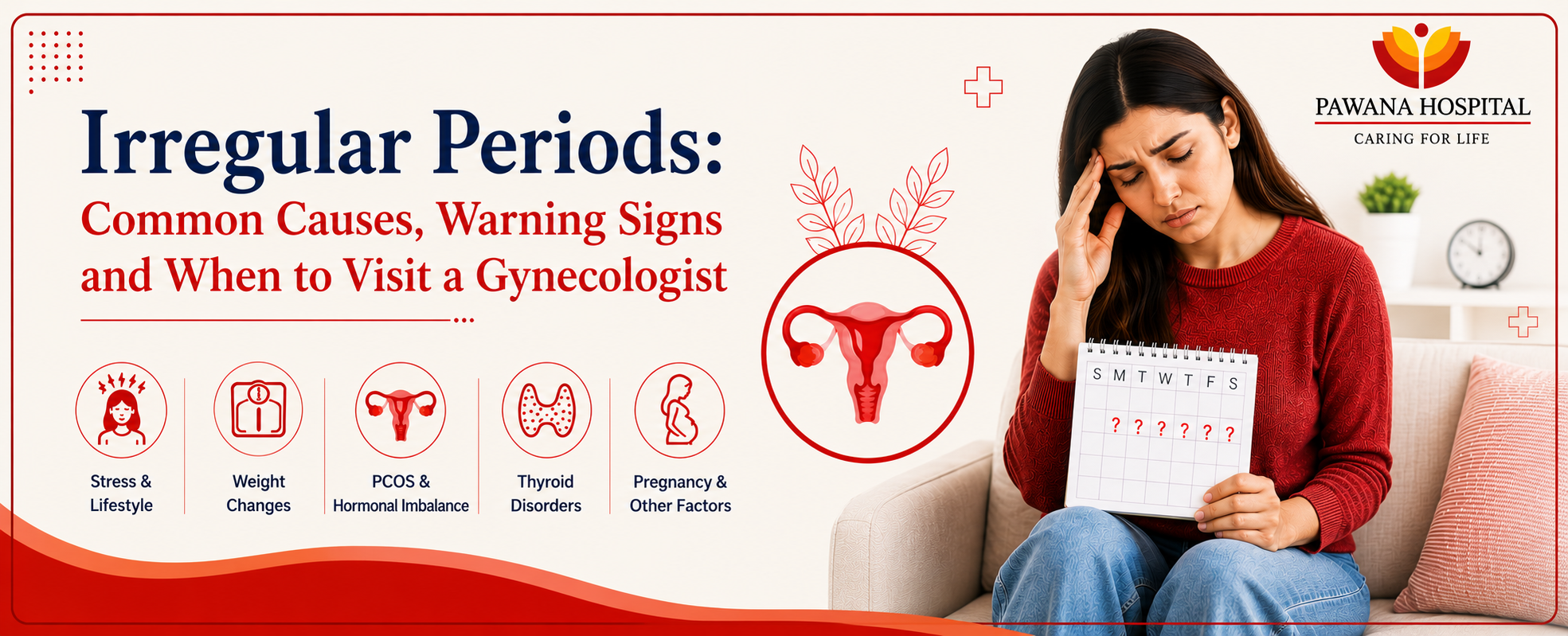
Common causes include:
• Stress
• Significant weight loss or weight gain
• Excessive exercise
• Changes in eating patterns
• PCOS 2
• Thyroid disorders
• Pregnancy
• Breastfeeding
• Certain medications
• Hormonal contraception
• Perimenopause
• Other hormonal or gynecological conditions
Because so many different factors can affect menstruation, it is difficult to identify the cause based on cycle timing alone.
A gynecologist can evaluate your menstrual history together with other symptoms and recommend investigations when necessary.
Stress and Lifestyle-Related Changes
The menstrual cycle is regulated through a complex interaction between the brain, hormones, ovaries, and reproductive organs.
Periods may become irregular during periods of:
• Severe emotional stress
• Inadequate sleep
• Major changes in daily routine
• Rapid weight loss
• Significant weight gain
• Restrictive dieting
• Excessive exercise
• Intense athletic training
• Recent illness
For example, sudden weight loss or very intense exercise can affect hormone production and interfere with normal ovulation.
However, persistent irregular periods should not automatically be blamed on stress without medical evaluation.
Irregular Periods During Different Life Stages.
Menstrual patterns naturally change throughout a woman’s reproductive life.
1. Adolescence
During the first few years after periods begin, cycles may be less predictable because the hormonal system controlling ovulation is still maturing.
However, extremely heavy bleeding, very prolonged gaps between periods, severe pain, or other concerning symptoms still deserve medical attention.
2.Reproductive Years
During adulthood, new menstrual irregularities may occur because of pregnancy, PCOS, thyroid problems, changes in weight, stress, medication, hormonal contraception, or other health conditions.
3.After Pregnancy
Periods may take time to return after childbirth, particularly during breastfeeding. The timing varies considerably between women.
4.Perimenopause
As women approach menopause, hormone levels begin to fluctuate and menstrual cycles may become shorter, longer, heavier, lighter, or less predictable.
Although irregular periods can occur during perimenopause, unusual or very heavy bleeding should still be discussed with a gynecologist rather than automatically attributed to menopause.
Warning Signs You Should Not Ignore
Some menstrual changes require more prompt medical evaluation.
Consult a healthcare professional if you experience:
• Very heavy menstrual bleeding
• Bleeding lasting much longer than usual
• Severe or worsening pelvic pain
• Frequent bleeding between periods
• Bleeding after sexual intercourse
• Periods that suddenly become significantly irregular
• Periods stopping unexpectedly when pregnancy is not the cause
• Menstrual problems accompanied by dizziness, fainting, or significant weakness
• Irregular periods with unexplained weight changes or other hormonal symptoms 5
Heavy or prolonged menstrual bleeding can sometimes contribute to iron-deficiency anaemia, which may cause fatigue, weakness, breathlessness, dizziness, or paleness.
Sudden severe pelvic pain accompanied by heavy bleeding, fainting, or possible pregnancy requires urgent medical assessment.
How Are Irregular Periods Diagnosed?
Evaluation generally begins with a detailed discussion about your menstrual and medical history.
A gynecologist may ask:
• When your periods started becoming irregular
• Your usual cycle length How long bleeding lasts
• Whether bleeding has become heavier or lighter
• Whether periods are being missed
• Whether you have pelvic pain Whether pregnancy is possible
• Whether your weight has recently changed
• Whether you have acne or increased facial hair
• What medications or contraceptives you use
• Whether you have other medical conditions
A physical or gynecological examination may also be recommended depending on your symptoms
Tests Your Gynecologist May Recommend
The investigations required depend on your symptoms, age, medical history, and suspected underlying cause.
Possible tests may include:
•Pregnancy Test
Pregnancy is an important cause to rule out when a period is unexpectedly delayed or missed.
•Complete Blood Count
A blood test may be recommended to check for anaemia, particularly when menstrual bleeding is heavy or prolonged.
•Thyroid Function Tests
Tests such as TSH may be recommended when thyroid dysfunction is suspected.
•Hormonal Tests
Depending on symptoms, doctors may recommend selected hormonal investigations to evaluate ovulation or possible endocrine conditions.
•Blood Sugar or Metabolic Tests
Women with suspected PCOS or metabolic risk factors may require evaluation of blood glucose or other metabolic parameters.
•Pelvic Ultrasound
An ultrasound can help evaluate the uterus and ovaries and may be recommended when conditions such as PCOS, fibroids, ovarian cysts, or other structural abnormalities are suspected.
Not every patient needs every test. Investigations should be selected according to the clinical situation.
Treatment Options
There is no single treatment for all irregular periods. Treatment depends on the underlying cause, symptoms, age, medical history, and reproductive goals.
•Lifestyle Management
When stress, significant weight changes, inadequate nutrition, or excessive exercise contribute to menstrual irregularity, addressing these factors may help restore more regular cycles.
•Treatment for PCOS
Management may include lifestyle modification, weight management when appropriate, medications to regulate cycles or manage symptoms, and treatment of associated metabolic problems.
Women trying to become pregnant may require a different treatment approach
•Thyroid Treatment
When thyroid disease is responsible for menstrual changes, treating the thyroid condition may help improve cycle abnormalities.
•Hormonal Tests
Depending on symptoms, doctors may recommend selected hormonal investigations to evaluate ovulation or possible endocrine conditions.
•Hormonal Treatment
Hormonal medicines may be recommended in selected cases to regulate menstrual bleeding or manage particular gynecological conditions.
•Treatment for Heavy Bleeding
Treatment depends on the cause and severity and may include medication, hormonal therapy, treatment of anaemia, or procedures in selected cases.
The objective should be to treat the cause of irregular periods rather than simply changing the timing of menstruation.
Can Lifestyle Changes Help Regulate Periods?
Lifestyle changes can be helpful when menstrual irregularities are associated with stress, weight changes, PCOS, excessive exercise, poor sleep, or metabolic factors.
Helpful habits may include:
•Maintain a healthy weight:
Both significant weight gain and being underweight can affect reproductive hormones and ovulation.
•Eat a balanced diet:
Adequate nutrition supports normal hormone production and overall reproductive health.
•Thyroid Treatment
When thyroid disease is responsible for menstrual changes, treating the thyroid condition may help improve cycle abnormalities.
•Hormonal Tests
Depending on symptoms, doctors may recommend selected hormonal investigations to evaluate ovulation or possible endocrine conditions.
•Exercise regularly:
Moderate physical activity can support metabolic and cardiovascular health, particularly in women with PCOS.
•Avoid excessive exercise:
Very intense exercise combined with inadequate calorie intake can interfere with menstruation.
Lifestyle changes can support menstrual health, but they should not replace medical evaluation when periods remain persistently irregular.
Women’s Health Care at Pawana Hospital
Women’s health needs can change significantly from adolescence through the reproductive years, pregnancy, and menopause.
At Pawana Hospital, women experiencing irregular periods or other menstrual concerns can receive gynecological evaluation based on their symptoms, menstrual history, age, and overall health.
Depending on the individual condition, evaluation may include clinical examination, blood investigations, hormonal or thyroid testing, ultrasound, and other investigations when medically appropriate.
Women with menstrual irregularities related to PCOS, hormonal problems, pregnancy planning, heavy bleeding, or other gynecological conditions may require an individualised treatment and follow-up plan.
Rather than simply trying to make a period arrive on time, appropriate gynecological care focuses on identifying why the menstrual cycle has changed and treating the underlying cause.
If your menstrual pattern has changed significantly or remained irregular for several months, consulting a gynecologist can help you understand what is happening and whether treatment is required.
FAQs
Q: How many days late can a period be before it is considered irregular?
A menstrual cycle can naturally vary by a few days. What matters is whether significant changes happen repeatedly or your cycle becomes substantially different from its usual pattern.
Q: Are irregular periods normal during teenage years?
Some cycle irregularity can occur during the first few years after menstruation begins. Very heavy bleeding, severe pain, prolonged absence of periods, or other concerning symptoms should still be medically evaluated.
Q: Are irregular periods normal before menopause?
Periods commonly become less predictable during perimenopause. However, very heavy bleeding, bleeding between periods, bleeding after intercourse, or other unusual changes should still be discussed with a gynecologist.
Q: When is irregular bleeding an emergency?
Seek urgent medical attention for extremely heavy bleeding accompanied by fainting, severe weakness, severe pelvic or abdominal pain, or symptoms occurring with a possible pregnancy.
Conclusion
An occasional early or late period is common and does not automatically mean something is wrong. However, persistent changes in menstrual timing, frequency, duration, bleeding, or pain should not be ignored.
Irregular periods can occur because of stress and lifestyle changes, but they may also be associated with PCOS, thyroid disorders, pregnancy-related changes, hormonal problems, perimenopause, or other gynecological conditions.
Instead of focusing only on making the next period arrive on time, the most important step is identifying the underlying reason for the change.
Tracking your menstrual cycle, maintaining healthy lifestyle habits, and seeking medical evaluation when irregularities persist can help protect your reproductive and overall health.
If your periods have suddenly changed, remain irregular for several cycles, become unusually heavy or painful, or are accompanied by other concerning symptoms, consult a gynecologist for appropriate evaluation and treatment.