Angiography vs Angioplasty: Key Differences, Purpose & When You Need Them
Table of Contents
ToggleHeart disease remains one of the leading causes of death worldwide and in India. According to the World Health Organization (WHO), cardiovascular diseases account for nearly 32% of global deaths, highlighting the importance of early diagnosis and timely treatment. In clinical practice, angiography and angioplasty are commonly used to identify and manage blocked arteries. However, many patients are unsure about what is angiography and angioplasty, as these procedures are often performed together.
An angiography (or angiogram) is primarily a diagnostic imaging test used to detect blockages in blood vessels, whereas angioplasty is a treatment procedure used to open those blockages and restore blood flow. Understanding the difference between angiography and angioplasty (or angiogram vs angioplasty) can help patients make informed decisions about their care.
This article explains the procedures, key differences, preparation, risks, recovery, angiography and angioplasty cost, and when each procedure is recommended.
What Is Angiography?
Angiography is a diagnostic imaging procedure used to examine blood vessels and assess how well blood is flowing through them. It is commonly used by doctors to detect blockages, narrowing, or abnormalities in the arteries—especially those supplying the heart. When patients ask what is angiography and angioplasty, it is important to understand that angiography is the diagnostic part of the process.
During the procedure, a special contrast dye is injected into the blood vessels, and X-ray imaging is used to create detailed pictures. These images help doctors clearly identify areas where blood flow may be reduced or blocked. Angiography is often the first step before deciding whether a treatment such as angioplasty is needed.
What Conditions Can Angiography Detect?
- Coronary artery disease
Angiography can detect narrowing or blockages in the coronary arteries, which supply blood to the heart. This condition can increase the risk of chest pain (angina) or heart attacks. - Blocked arteries
It helps identify partial or complete blockages in blood vessels, allowing doctors to determine the severity and exact location of the obstruction. - Blood vessel abnormalities
Angiography can reveal structural issues such as aneurysms (bulging blood vessels) or malformations that may affect normal blood flow. - Atherosclerosis
This condition involves the build-up of plaque (fat, cholesterol, and other substances) inside the arteries. Angiography helps assess how much plaque has accumulated and how it is affecting circulation. - Reduced blood flow to the heart
By visualising blood movement, angiography can show areas where the heart muscle is not receiving enough oxygen-rich blood, which may explain symptoms such as chest pain or breathlessness.
What Is Angioplasty?
Angioplasty is a minimally invasive treatment procedure used to open narrowed or blocked arteries and restore normal blood flow. While angiography helps diagnose the problem, angioplasty is performed to treat it. This is why understanding what is angiography and angioplasty is important—one identifies the blockage, and the other corrects it.
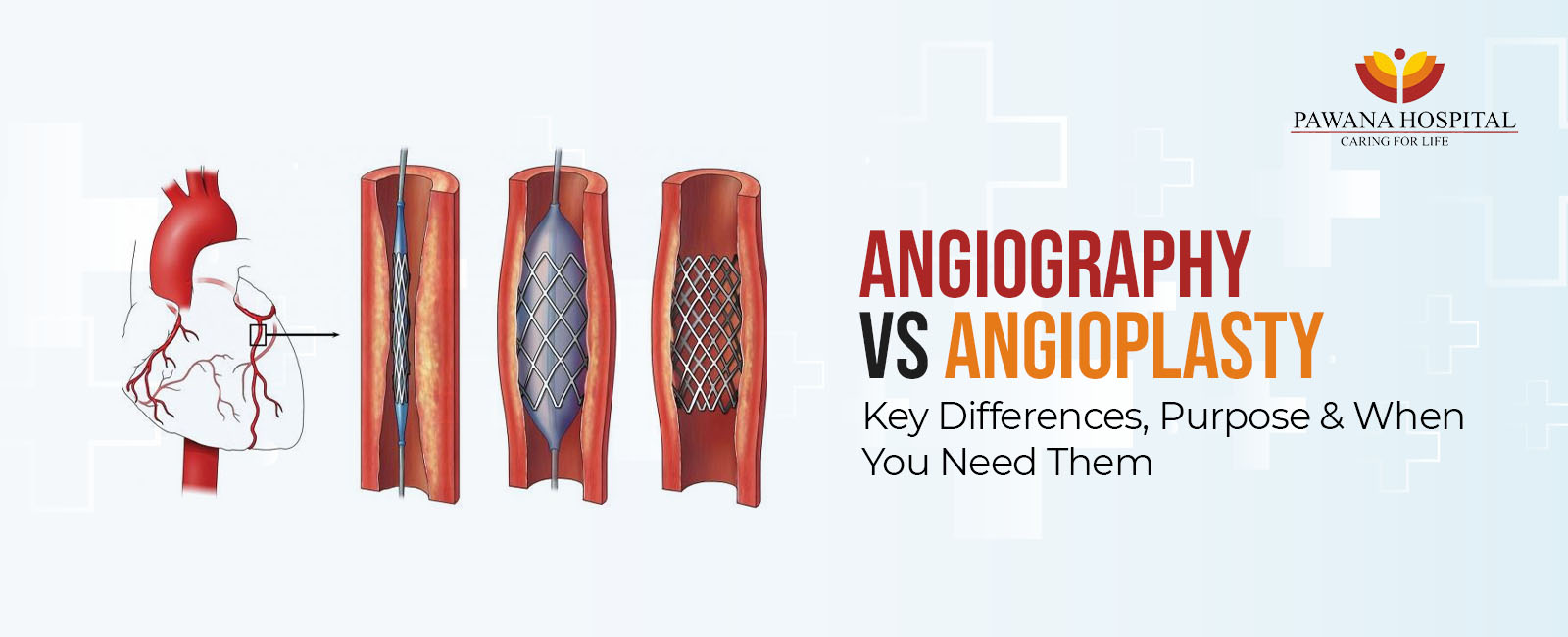
During angioplasty, a thin tube called a catheter is inserted into a blood vessel and guided to the affected artery. A small balloon attached to the catheter is then inflated to widen the narrowed area. In most cases, a stent (a small mesh tube) is placed to keep the artery open and prevent it from narrowing again. This procedure is commonly used to treat conditions such as coronary artery disease.
How Angioplasty Restores Blood Flow
- Catheter inserted through an artery
The procedure begins with the insertion of a catheter, usually through an artery in the wrist or groin. It is carefully guided to the site of the blockage using imaging techniques. - Balloon expanded at the blockage site
Once the catheter reaches the narrowed artery, a small balloon at its tip is inflated. This presses the plaque against the artery walls, helping to clear the blockage. - Artery widened
The inflation of the balloon widens the artery, allowing blood to flow more freely to the heart or other affected areas. - Stent placed to keep the artery open
In most cases, a stent is placed at the site of the blockage. A stent is a small, expandable metal mesh tube that acts as a support structure inside the artery. It helps keep the artery open long-term and reduces the risk of it narrowing again.
By restoring proper blood flow, angioplasty can relieve symptoms such as chest pain and reduce the risk of heart-related complications.
Angiography vs Angioplasty: Key Differences Explained
Many patients often feel confused when comparing angiogram vs angioplasty, as both procedures are related to heart care and are sometimes performed during the same hospital visit. However, they serve very different purposes. Understanding the difference between angiography and angioplasty can help you better understand your diagnosis, treatment plan, and what to expect during your care.
|
Feature |
Angiography |
Angioplasty |
|
Purpose |
Diagnose blocked or narrowed arteries |
Treat blocked or narrowed arteries |
|
Procedure Type |
Diagnostic imaging test |
Interventional treatment procedure |
|
Equipment Used |
Contrast dye and X-ray imaging |
Balloon catheter, often with stent placement |
|
Duration |
Typically 30–60 minutes |
Usually 1–2 hours |
|
Hospital Stay |
Often same-day discharge |
May require overnight observation |
|
Outcome |
Identifies location and severity of blockage |
Restores blood flow by opening the artery |
|
Risks |
Minimal, generally low-risk |
Slightly higher due to intervention inside the artery |
|
Frequency |
Performed to diagnose heart conditions |
Done only when a blockage is confirmed |
|
Cost |
Lower compared to treatment procedures |
Higher due to therapeutic intervention |
In simple terms, angiography helps doctors find the problem, while angioplasty helps fix it. Together, angiography and angioplasty play a crucial role in diagnosing and managing heart disease effectively.
How Angiography and Angioplasty Procedures Work
Both angiography and angioplasty are minimally invasive procedures performed using similar techniques, often in a specialised catheterisation lab. While angiography focuses on diagnosing the problem, angioplasty is carried out to treat it. Understanding how each procedure works step-by-step can help patients feel more informed and confident before undergoing treatment.
Steps in an Angiography Procedure
- Local anaesthesia given
The procedure begins with local anaesthesia to numb the area, usually in the wrist or groin, ensuring minimal discomfort during catheter insertion. - Catheter inserted into an artery
A thin, flexible tube (catheter) is inserted into a blood vessel and carefully guided towards the heart or the area being examined. - Contrast dye injected
A special contrast dye is injected through the catheter. This dye makes the blood vessels visible on imaging. - X-ray imaging performed
Real-time X-ray images (fluoroscopy) are taken to track the flow of the dye through the arteries. - Blockages detected
Doctors analyse the images to identify any narrowing, blockages, or abnormalities in the blood vessels.
Steps in an Angioplasty Procedure
- Catheter guided to the blocked artery
Similar to angiography, a catheter is inserted and guided to the exact location of the blockage identified during the diagnostic test. - Balloon inflated
A small balloon at the tip of the catheter is inflated at the narrowed area to open up the artery. - Plaque compressed
The inflation of the balloon presses the plaque against the artery walls, widening the passage for blood flow. - Stent inserted
In most cases, a stent (a small mesh tube) is placed at the site to keep the artery open and prevent re-narrowing. - Blood flow restored
Once the artery is widened and supported by the stent, normal blood flow is restored, helping relieve symptoms and reduce the risk of complications.
These procedures are commonly performed together, especially when a blockage is detected during angiography and requires immediate treatment through angioplasty.
When Do Doctors Recommend Angiography?
Doctors recommend angiography when they need a clear and detailed view of the blood vessels, especially if there are signs of reduced blood flow to the heart. As a diagnostic procedure, it plays a crucial role in identifying the presence, location, and severity of arterial blockages before deciding on treatments such as angioplasty.
Common situations where angiography may be advised include:
- Persistent chest pain
If a patient experiences ongoing or unexplained chest pain (angina), angiography helps determine whether it is caused by narrowed or blocked coronary arteries. - Suspected coronary artery disease
When symptoms or risk factors suggest coronary artery disease, doctors may use angiography to confirm the diagnosis and assess the extent of blockage. - Abnormal ECG or stress test results
If initial tests such as an electrocardiogram (ECG) or a cardiac stress test show irregularities, angiography provides a more detailed view to identify the exact issue. - Shortness of breath
Difficulty breathing, especially during physical activity, may indicate reduced blood flow to the heart. Angiography helps evaluate whether blocked arteries are the cause. - High risk of heart attack
Patients with multiple risk factors—such as high blood pressure, diabetes, high cholesterol, or a family history of heart disease—may undergo angiography to assess their risk and guide preventive treatment.
By identifying blockages early, angiography allows doctors to decide whether medical management is sufficient or if procedures like angioplasty are needed to restore proper blood flow.
When Is Angioplasty Needed?
Angioplasty is recommended when a significant blockage in an artery is affecting blood flow and requires immediate or planned treatment. While angiography helps identify the problem, angioplasty is performed to restore circulation and prevent serious complications such as heart attack.
Doctors may advise angioplasty in the following situations:
- Severe artery blockage detected
If angiography reveals a major narrowing or blockage in a coronary artery, angioplasty is often performed to open the artery and improve blood flow. - Heart attack occurs
During a heart attack, a coronary artery becomes suddenly blocked. Emergency angioplasty is commonly used to quickly restore blood flow and minimise damage to the heart muscle. - Reduced blood flow to the heart
When blood supply to the heart is significantly reduced, patients may experience symptoms such as chest pain or fatigue. Angioplasty helps improve circulation and relieve these symptoms. - Angina not controlled with medication
If chest pain (angina) persists despite medication and lifestyle changes, angioplasty may be recommended to provide more effective and long-term relief.
By restoring proper blood flow, angioplasty can improve quality of life, reduce symptoms, and lower the risk of future cardiac events.
Who May Need an Angiogram or Angioplasty?
Certain individuals are at a higher risk of developing heart-related conditions and may require diagnostic or treatment procedures such as an angiogram or angioplasty. Identifying these high-risk groups helps doctors decide when angiography and angioplasty may be necessary for early detection and effective management.
- Patients with coronary artery disease
Individuals already diagnosed with coronary artery disease may need regular monitoring through angiography and, if required, treatment with angioplasty to manage blockages. - People with diabetes
Diabetes can damage blood vessels over time and increase the risk of artery blockages. Such patients may require closer cardiac evaluation and intervention. - Individuals with high cholesterol
High levels of cholesterol can lead to plaque build-up in the arteries (atherosclerosis), increasing the likelihood of needing procedures like an angiogram or angioplasty. - Smokers
Smoking damages blood vessels and accelerates plaque formation, significantly raising the risk of heart disease and arterial blockages. - People with a family history of heart disease
A strong genetic predisposition can increase the risk of cardiovascular conditions, making early screening and timely intervention more important.
People in these categories may not always have symptoms initially, but proactive evaluation can help detect problems early and prevent serious complications.
Preparing for Angiography or Angioplasty
Proper preparation helps ensure that angiography and angioplasty procedures are performed safely and effectively. Doctors and healthcare teams guide patients through each stage—before, during, and after the procedure—to minimise risks and support smooth recovery.
Before the Procedure
- Fasting for several hours
Patients are usually advised not to eat or drink for a few hours before the procedure to reduce the risk of complications. - Blood tests and ECG
Routine tests, including blood investigations and an electrocardiogram (ECG), are performed to assess overall health and heart function. - Medication review
Doctors review current medications, especially blood thinners, diabetes medicines, or blood pressure drugs, and may adjust them if needed. - Inform doctor about allergies
It is important to inform the doctor about any allergies, particularly to contrast dye, iodine, or medications, as these are used during the procedure.
During the Procedure
- Local anaesthesia used
The area where the catheter is inserted (usually the wrist or groin) is numbed with local anaesthesia to reduce discomfort. - Minimal discomfort
Patients are usually awake during the procedure and may feel slight pressure but not significant pain. - Monitoring of heart rate and blood pressure
Vital signs such as heart rate, blood pressure, and oxygen levels are continuously monitored to ensure patient safety.
After the Procedure
- Observation for several hours
Patients are monitored for a few hours to check for any complications, such as bleeding at the insertion site. - Avoid strenuous activity
Physical exertion should be limited for a few days to allow proper healing, especially at the catheter insertion site. - Follow medication instructions
Doctors may prescribe medications, including blood thinners, to prevent clot formation. It is important to follow all instructions carefully for optimal recovery.
Following these preparation and aftercare guidelines can help ensure a safe procedure and improve overall outcomes.
Risks and Possible Complications
Both angiography and angioplasty are widely performed and generally considered safe procedures. Advances in technology and experienced medical teams have significantly reduced the risk of complications. However, like any medical procedure, there are some potential risks that patients should be aware of.
Possible complications may include:
- Bleeding at the catheter insertion site
Mild bleeding or bruising can occur where the catheter is inserted (usually the wrist or groin). This is typically minor and resolves with proper care. - Allergic reaction to contrast dye
Some patients may react to the contrast dye used during angiography. Reactions are usually mild, but doctors take precautions, especially if there is a known allergy. - Blood clots
In rare cases, blood clots may form within the blood vessels, which could affect blood flow and require additional treatment. - Artery damage
There is a small risk of injury to the blood vessel during catheter insertion or manipulation, although this is uncommon. - Infection
Infection at the insertion site is rare but possible. Proper sterile techniques and aftercare help minimise this risk. - Rare heart attack or stroke
Serious complications such as heart attack or stroke are very rare but can occur, particularly in high-risk patients.
It is important to note that complication rates for both procedures are low, and the benefits of diagnosing and treating blocked arteries often outweigh the risks. Doctors carefully evaluate each patient’s condition to ensure the safest and most appropriate treatment approach.
Recovery After Angiography vs Angioplasty
Recovery after angiography and angioplasty varies depending on the type of procedure performed. Since angiography is a diagnostic test, recovery is usually quick and straightforward. In contrast, angioplasty is a treatment procedure, so it may require closer monitoring and longer-term care. Understanding these differences helps patients know what to expect after each procedure.
Recovery After Angiography
- Usually discharged the same day
Most patients can go home within a few hours after the procedure, once doctors confirm there are no complications. - Rest for 24 hours
Patients are advised to rest and avoid strenuous activities for at least a day to allow the catheter insertion site to heal. - Avoid heavy lifting
Heavy lifting and intense physical activity should be avoided for a short period to prevent bleeding or strain at the insertion site.
Recovery After Angioplasty
- Hospital observation
Patients may need to stay in the hospital for observation, especially if a stent has been placed or if the procedure was performed during an emergency. - Medication to prevent clotting
Doctors usually prescribe medications such as antiplatelets (blood thinners) to prevent clot formation and ensure the stent remains open. - Lifestyle changes required
Long-term recovery includes adopting heart-healthy habits, such as a balanced diet, regular exercise, quitting smoking, and managing conditions like diabetes or high cholesterol.
While recovery from angioplasty may take longer than angiography, following medical advice carefully can significantly improve outcomes and reduce the risk of future heart problems.
Can Angiography and Angioplasty Be Done Together?
Yes, angiography and angioplasty are often performed together in a single session, depending on the findings. In most cases, doctors begin with angiography to examine the blood vessels and identify any blockages or narrowing.
If a significant blockage is detected during the angiogram, the doctor may proceed immediately with angioplasty to treat it. This approach allows the artery to be opened in the same sitting, without the need for a separate procedure later.
Performing both procedures together offers several advantages. It reduces the need for multiple hospital visits, minimises overall recovery time, and allows quicker restoration of blood flow—especially important in urgent situations. This combined approach is commonly used in modern cardiac care for both convenience and better patient outcomes.
Alternatives to Angiography and Angioplasty
While angiography and angioplasty are commonly used for diagnosing and treating blocked arteries, some alternative tests and treatments may be recommended based on the patient’s condition.
CT Coronary Angiography
A non-invasive imaging test that uses CT scans and contrast dye to visualise coronary arteries. It helps detect blockages without inserting a catheter into the body.
Stress Test
This test evaluates how well the heart functions during physical activity or under stress. It helps identify reduced blood flow and may indicate the need for further investigation.
Coronary Artery Bypass Surgery (CABG)
CABG is a surgical procedure used in cases of severe or multiple artery blockages. It creates a new pathway for blood flow around the blocked arteries, improving circulation to the heart.
Cost of Angiography vs Angioplasty
The angiography and angioplasty cost in India can vary widely depending on several factors such as the hospital, city, complexity of the case, and type of treatment required. Generally, angiography is more affordable as it is a diagnostic test, while angioplasty is a treatment procedure and therefore costs more.
Average Cost Comparison in India
|
Procedure |
Average Cost in India |
|
Angiography |
₹15,000 – ₹50,000 |
|
Angioplasty (with stent) |
₹1,50,000 – ₹3,50,000 |
These ranges are approximate and may vary. For example, angiography typically costs between ₹20,000 and ₹60,000 depending on the hospital and city , while angioplasty can range from around ₹1.2 lakh to ₹4.5 lakh based on the number of stents and complexity of the procedure .
Factors Affecting Cost
- Hospital type
Private hospitals generally charge more than government or trust hospitals due to advanced facilities and infrastructure. - Number and type of stents used
The cost of angioplasty increases significantly if multiple or specialised stents (such as drug-eluting stents) are required. - City and location
Costs may be higher in metro cities compared to smaller towns due to higher operational expenses. - Insurance coverage
Health insurance can reduce out-of-pocket expenses, depending on the policy and hospital network.
Understanding these cost differences between angiogram vs angioplasty can help patients plan their treatment better and make informed financial decisions.
FAQ Related to Angiography and Angioplasty
Q1. Is an angiogram painful?
An angiogram is usually not painful. Local anaesthesia is used to numb the insertion site, so patients may only feel slight pressure during the procedure. Some may experience a brief warm sensation when the contrast dye is injected, but overall discomfort is minimal.
Q2. How long does it take to recover from angioplasty?
Recovery after angioplasty typically takes a few days to a week for most patients. Hospital observation may be required initially, followed by rest at home. Full recovery depends on overall health, but patients can usually resume normal activities within a week with medical guidance.
Q3. Can a stent move after placement?
Once properly placed, a stent is designed to stay securely in the artery. It becomes embedded in the vessel wall over time, making movement very unlikely. Following post-procedure instructions and medications helps ensure the stent remains stable and effective.
Q4. Are angiograms and angioplasties safe?
Yes, both angiography and angioplasty are generally safe and commonly performed procedures. While there are some risks, complications are rare, especially when done by experienced specialists. The benefits of diagnosing and treating blocked arteries usually outweigh the potential risks.
Q5. Is angiography necessary before angioplasty?
In most cases, yes. Angiography is performed first to identify the location and severity of the blockage. Based on these findings, doctors decide whether angioplasty is required and how it should be carried out for effective treatment.
Key Takeaways
- Angiography is used to diagnose blockages or narrowing in the arteries and assess blood flow to the heart.
- Angioplasty is a treatment procedure that opens blocked arteries and restores normal blood circulation, often using a balloon and stent.
- Both angiography and angioplasty are commonly performed procedures in modern cardiology for effective heart care.
- Early diagnosis and timely treatment can help prevent serious complications such as heart attacks and improve overall heart health.
Need Expert Medical Care? Visit Pawana Hospital – A Trusted Multispeciality Hospital
If you are experiencing heart-related symptoms or require specialised cardiac care, the Cardiology Department at Pawana Hospital, Pune offers comprehensive and reliable treatment under one roof. Equipped with advanced cardiac diagnostic facilities, the hospital ensures accurate evaluation and timely intervention for heart conditions.
Our team of experienced cardiologists performs procedures such as angiography and angioplasty with precision and patient-focused care. From routine heart check-ups to emergency cardiac care, Pawana Hospital is committed to delivering safe, effective, and personalised treatment.
Don’t ignore warning signs—book an appointment or request a call back today to consult our cardiac experts and take a proactive step towards better heart health.