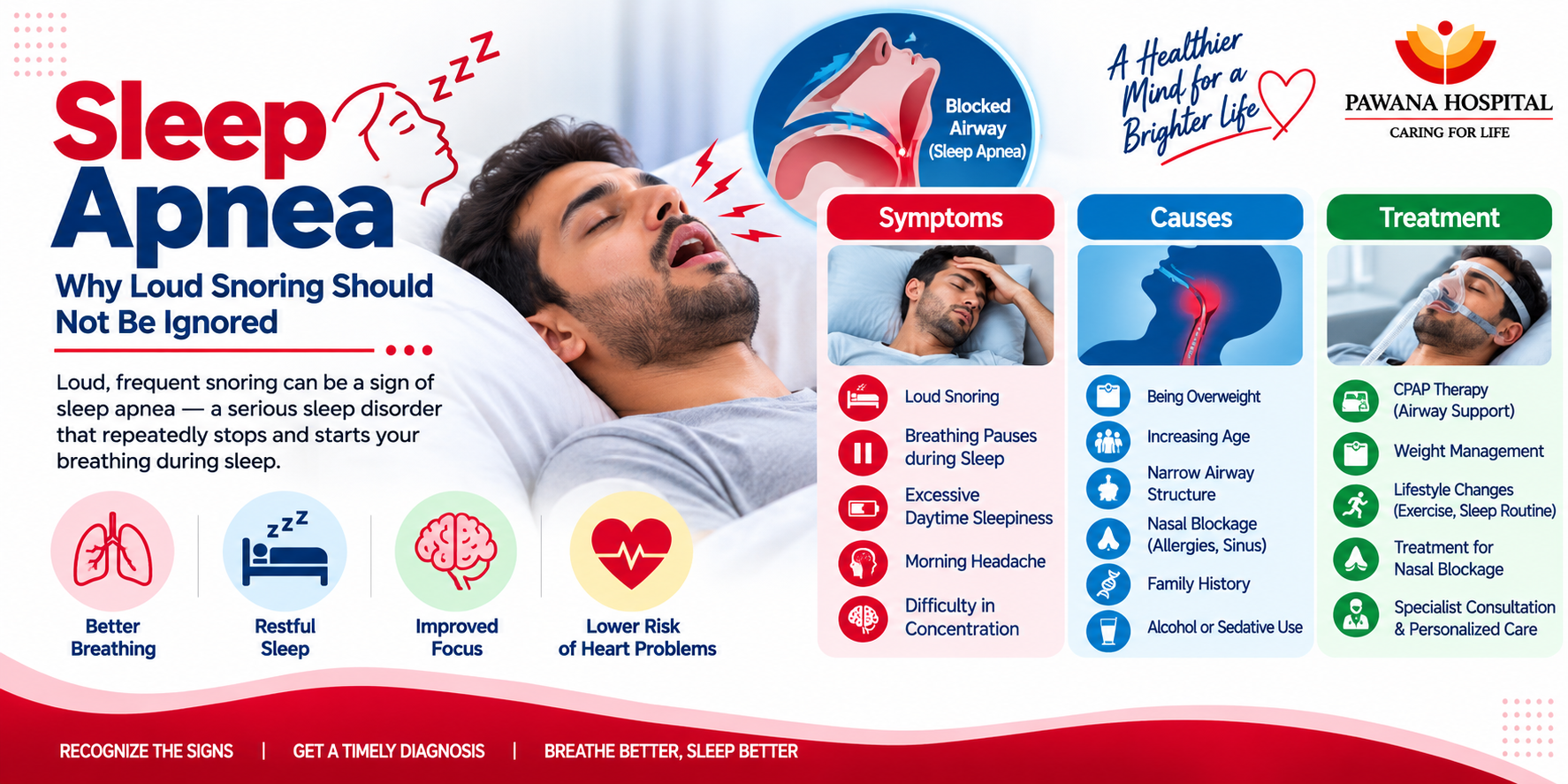
Sleep Apnea: Why Loud Snoring Should Not Be Ignored
Table of Contents
Toggle1. Introduction & Overview
Snoring is widely regarded as a harmless, albeit noisy, nighttime nuisance. However, loud and frequent snoring—especially when punctuated by sudden gasps, choking sounds, or noticeable pauses in breathing— often signals a serious medical disorder known as Sleep Apnea. Sleep apnea is a sleep-related breathing disorder characterized by repeated cessation of airflow during sleep. These nocturnal hypoxic episodes disrupt the sleep architecture, cause intermittent drops in blood oxygen saturation, and trigger a sympathetic fight-or-flight stress response. Over time, untreated sleep apnea places severe strain on the cardiovascular, metabolic, and neurological systems.
2. Understanding the Three Types of Sleep Apnea
Breathing pauses during sleep can occur due to mechanical collapse or neurological desynchronization:
| Type | Underlying Pathophysiology | Prevalence & Notes |
|---|---|---|
| Obstructive Sleep Apnea (OSA) | Physical relaxation and collapse of upper airway soft tissues (pharyngeal walls, tongue base) blocking airflow despite ongoing respiratory effort. | Accounts for >85% of clinical cases. Highly linked to obesity and tissue anatomy. |
| Central Sleep Apnea (CSA) | Neurological failure where the brain stem temporarily stops sending signals to the diaphragm and intercostal respiratory muscles. | Common in heart failure, stroke, or chronic high-dose opioid therapy. |
| Complex / Mixed Sleep Apnea | A combination showing obstructive airway collapse that unmasks central sleep apnea patterns during initial CPAP titration. | Requires specialized multimodality PAP therapy tuning. |
3. Key Clinical Symptoms
Because symptoms occur during sleep, patients are frequently unaware of their condition until a bed partner observes the disturbing nocturnal patterns:
Nocturnal Warning Signs:
Habitual loud snoring, witnessed apneas (breathing pauses), abrupt gasping or choking episodes, frequent nocturnal awakenings, and nocturia (frequent nighttime urination).
Daytime Indicators:
Excessive daytime sleepiness (EDS), waking up with a dry mouth or sore throat, morning tension headaches, brain fog, and severe irritability.
4. Risk Factors & Anatomical Predispositions
While sleep apnea can affect individuals of any age, gender, or body build, specific factors significantly increase risk:
| Risk Factor | Physiological Impact on Airway Stability |
|---|---|
| Excess Body Weight | Adipose deposits around the neck and upper airway narrow the lumen and increase mechanical collapsibility. |
| Anatomical Features | Enlarged tonsils or adenoids, retrognathia (receded jaw), thick neck circumference (>17 inches in men, >16 in women). |
| Age & Gender | 2–3 times more common in men; risk increases in post-menopausal women and elderly populations. |
| Sedatives & Alcohol | Relaxes pharyngeal muscles, increasing upper airway resistance and worsening airway collapse. |
5. Systemic Health Complications of Untreated OSA
Repeated nocturnal hypoxemia (low oxygen) and cortical micro-arousals cause chronic sympathetic nervous system surge, leading to multi-organ consequences:
Refractory Hypertension:
Oxygen dips trigger surges in adrenaline, raising systemic vascular resistance and leading to high blood pressure resistant to triple-drug therapy.
Cardiovascular Events:
Strong clinical association with atrial fibrillation, coronary artery disease, heart failure, and acute nocturnal ischemic stroke.
Metabolic Dysregulation & Type 2 Diabetes:
Chronic sleep fragmentation increases cortisol and systemic inflammation, worsening insulin resistance.
Cognitive & Occupational Impairment:
Severe daytime fatigue impairs memory, concentration, and executive function, increasing motor vehicle crash risks up to 7-fold.
6. Diagnostic Procedures
Confirming sleep apnea requires objective recording of sleep parameters to calculate the Apnea-Hypopnea Index (AHI—the number of breathing pauses per hour of sleep):
| Diagnostic Test | Physiological Impact on Airway Stability |
|---|---|
| Polysomnography (InLab PSG) | Gold-standard overnight sleep study. Continuously measures EEG (brain waves), EOG (eye movement), EMG, ECG, respiratory effort, airflow, and pulse oximetry. |
| Home Sleep Apnea Test (HSAT) | Portable diagnostic kit measuring nasal airflow, respiratory effort, and oxygen saturation. Ideal for uncomplicated moderate-to-severe OSA screening. |
Severity Classification: Mild OSA (AHI 5–14); Moderate OSA (AHI 15–29); Severe OSA (AHI ≥ 30 events per hour).
7. Evidence-Based Treatment Options
Continuous Positive Airway Pressure (CPAP):
The gold-standard primary treatment. CPAP delivers pressurized air through a mask to act as a pneumatic splint, keeping the pharyngeal airway open throughout the night.
Oral Mandibular Advancement Devices (MAD):
Custom dental appliances that reposition the lower jaw and tongue forward to enlarge the airway in mild-to-moderate OSA.
Lifestyle Interventions:
Weight management, positional therapy (avoiding sleeping flat on the back), complete alcohol avoidance before bed, and smoking cessation.
Surgical Approaches:
Uvulopalato pharyngoplasty (UPPP), tonsillectomy, or hypoglossal nerve stimulation reserved for refractory cases or anatomical obstructions.
8. Frequently Asked Questions (FAQs)
1. Does everyone who snores have sleep apnea?
No. Primary snoring occurs without breathing pauses or blood oxygen drops. However, loud habitual snoring accompanied by daytime fatigue or choking should always be evaluated.
2. Can people with a normal body weight develop sleep apnea?
Yes. While obesity is a major risk factor, thin individuals can develop OSA due to retrognathia (receded chin), narrow jaw structure, enlarged tonsils, or nasal septum deviation.
3. What happens if sleep apnea is left untreated?
Untreated sleep apnea significantly elevates long-term risks of resistant high blood pressure, stroke, heart failure, type 2 diabetes, and severe motor vehicle accidents.
4. Is CPAP therapy necessary for life?
CPAP manages the condition effectively while in use. Significant weight loss or surgical correction may reduce AHI levels, but treatment changes must be confirmed via a repeat sleep study.